%20(21).png)
Insights
5
min read
60% of B2B Research Never Touches Your Website. Here's What to Do Next.
August 25, 2026
You're managing a buying committee with machines sitting on it.
Something has shifted in how B2B buyers do their research, and most of us felt it before we had the numbers to back it up. Zero-click search, getting your answer without ever clicking through to a site, has been creeping up for years. Forrester's latest Buyers' Journey Survey, which polled nearly 18,000 business buyers worldwide, found that 94% used AI in their most recent purchase, and when asked to rank what helped them decide, they put AI ahead of vendor websites, ahead of sales reps and product experts. Not close behind. Ahead.
We heard the same thing, completely unprompted, at our own AI in B2B Discussion Panel Series this spring.
At the same event, another attendee put a number on it that stuck with us:
B2B buyers are already researching products inside LLMs at a rate in the high 80% range, and the "zero-click journey" isn't an edge case anymore, it's close to the default.
The pain points are real, and they compound
Three problems are colliding at once. Search traffic is declining as AI Overviews intercept the query before a click happens, and most teams don't have a proven replacement channel. Last-click attribution - still the backbone of most B2B reporting - can't see influence that happens inside a chat interface with no click, no UTM, and no landing page visit. And until now, marketing leaders haven't had a direct way to reach buyers inside that environment at all.
For B2B marketers, this hits harder than consumer categories, because B2B buying already involves multiple stakeholders, long research cycles, and dense, comparison-heavy content - exactly the conditions where a buying committee would rather ask an AI to synthesize ten datasheets than read them all individually. At our London panel, one marketing leader cited a Forrester figure that reframes the whole problem: the average B2B buying committee now runs about 16 people, nine internal and seven external - and several of those external touchpoints are AI tools and LLMs, not other humans.
Here's what that actually costs you: if 60% of your buyers' research never touches your site, 60% of your influence is invisible to the reports you use to defend your budget. You'remanaging a channel your dashboard was not built to see.
There's Now a Lever
Today, that changes.
OpenAI has opened ChatGPT to advertisers. It's a shift that puts a paid media surface directly inside how buyers now research, and ProspectBase now offers this as a managed solution for early testing.
For the first time B2B brands can sit directly inside the exact moment your buyers are researching, comparing, and building their shortlist - not adjacent to it, not upstream of it, inside it.
Here's what that looks like in practice: when a buyer prompts ChatGPT something like "best CRM for small businesses," a sponsored result can appear directly beneath the model's answer, clearly labeled Sponsored, with a short headline, a one-line description, and a link back to you. It's a small, contextual unit - closer in spirit to a well-targeted search or display ad than to a disruptive placement - but it sits somewhere no search campaign or display network has ever reached: inside the answer itself.
This is the moment marketing leaders have been waiting for since zero-click numbers started climbing with no lever to pull.
.png)
What This Is (and Isn't) Yet
This is also exactly the kind of early, moving-target environment we manage on your behalf. So here's the straight picture, translated, not buried in a platform changelog.
Let's be straight about where this actually stands. Targeting right now is contextual, and is based on the content of the buyer's prompt - not audience or demographic targeting. Your ad shows up because what you sell is relevant to the conversation, not because of who's on the other end. Reporting is early too: you'll see impressions and clicks, not the deeper funnel diagnostics you're used to from paid search or LinkedIn.
Right now, that also means reach skews toward free-tier researchers and earlier-stage buyers.
That's the honest picture, and none of it is a reason to sit this out. None of that makes it less worth testing. It's the reason to test it properly and deliberate, and now, before the targeting and reporting mature and the advantage of moving early is gone.
Run Your First Test
Treat this as a structured experiment, not a channel migration. Pick one high-intent research moment your buyers already have - a comparison query, a "best X for Y" question, a category-defining prompt - and put a small, well-scoped test in front of it. Measure whether your brand shows up.
The bigger shift underneath the format is attribution itself. The meaningful metric is no longer last-click - it's whether your brand shows up at all inside an AI-generated answer. At our Silicon Valley panel, one marketing leader described attribution as an ongoing turf war among stakeholders, everyone claiming credit for the same result, no matter how much AI sits in the stack. Most B2B teams don't have a system for tracking visibility inside AI answers yet. Starting now, even informally, puts you ahead of competitors still reporting exclusively on website sessions.
Getting started: The next 12 months
This is an early-stage environment, and it will change fast. Treat it as an experimentation budget line, not a bet-the-quarter reallocation. Run a well-scoped test this quarter, track brand visibility inside AI answers alongside your traditional metrics, and treat every learning as an input into a bigger 2027 media plan. The teams testing now will have real performance data by the time this channel matures. The teams that wait will be reacting to a channel their competitors already understand.
It's also worth watching what comes after this. At our London panel, Tiffany Jackson of Dell Technologies pointed to a shift already underway on the B2B side: agent-to-agent buying, where an AI agent acting on the buyer's behalf transacts directly with a vendor, no human clicking "buy" at all. Her view was that B2B is moving toward this faster than consumer categories, since business buyers are more comfortable handing that step to an agent than consumers are. Not every panelist shared her comfort level with it, but the direction was clear enough that it belongs on your radar as the next stage of the same shift you're testing for today.
Get In Before the Channel Matures
The open web is no longer thedefault destination, and now there's a way to test what comes next.
If you're weighing how this fits into a broader demand strategy, or want a second opinion on where to place your first test, get in touch with ProspectBase before you spend a dollar on a test.
Discover the Power of ABM
Insights
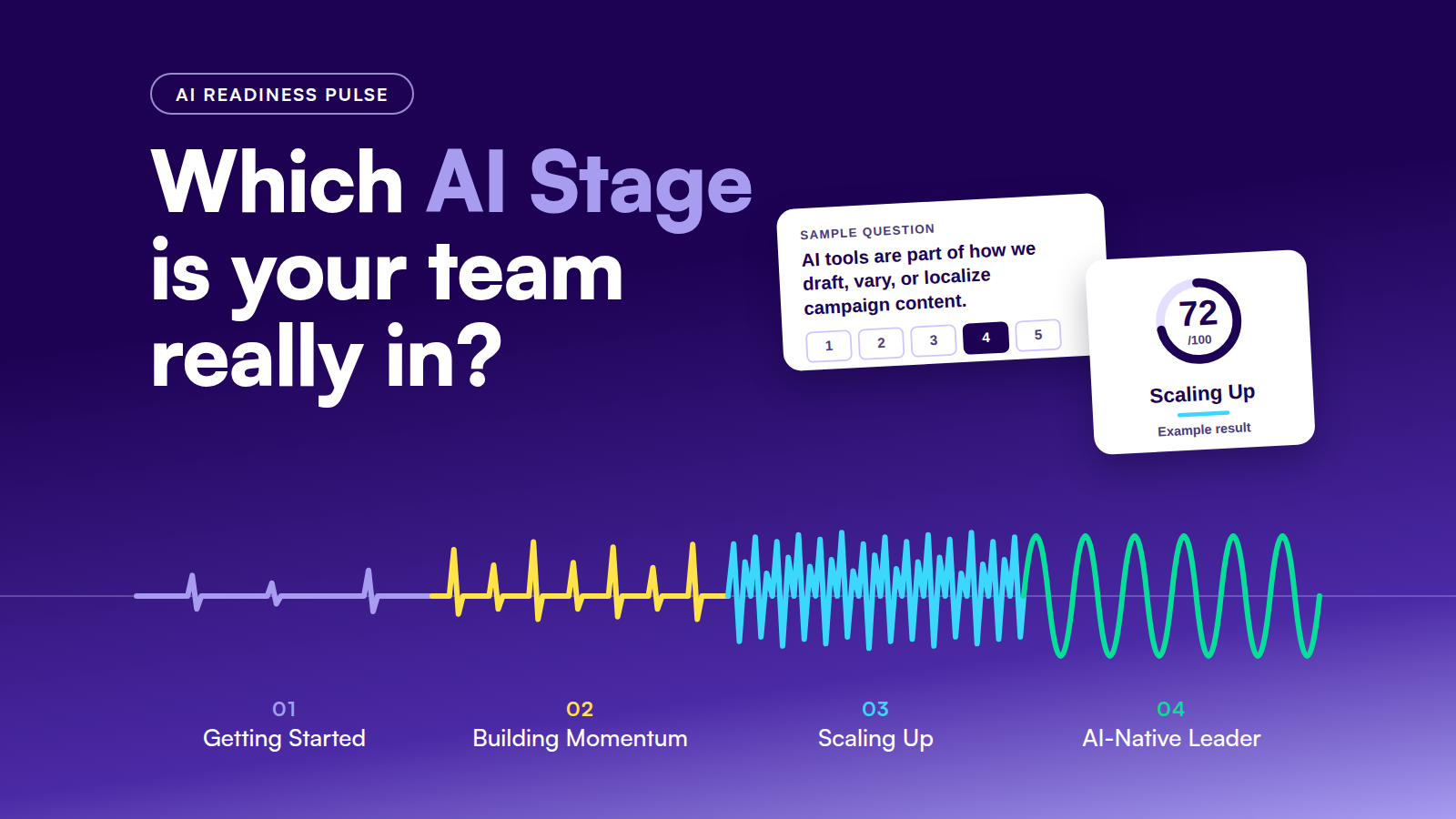
AI Readiness Pulse | Is your team AI Ready? What to do next.
The AI Readiness Pulse is a free 3-minute self-assessment for B2B marketing teams. Find your AI stage, see five capability areas, and get a stage guide.
Read more
.png)
Insights
Report | The State of AI in B2B Marketing 2026
Download | 67% of B2B buyers now prefer a rep-free experience. See what's driving the shift, and where AI adoption is outpacing governance, in our 2026 report.
Read more
%20(13).png)
Insights
The AI Execution Gap: Why B2B Teams Are Stuck Between Strategy and Action
AI adoption in B2B is accelerating. Execution isn't. Insights from our recent panel discussions reveal why GTM teams are stuck - and what closes the gap.
Read more










238M+ Verified Contacts
100% In-House Delivery
100% Compliant Leads